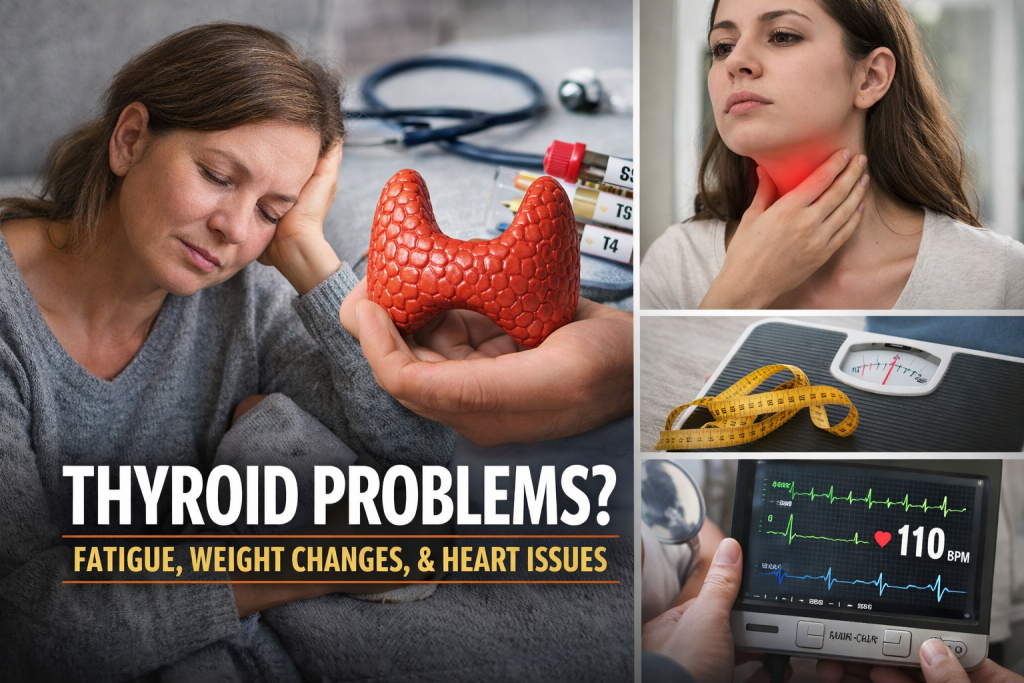
The thyroid is a small gland in the front of the neck, but it has a big job. It helps control how fast your body uses energy, how warm you feel, how your heart beats, and how many everyday systems function behind the scenes. When the thyroid stops working properly, the effects can show up in ways that are easy to overlook at first, such as fatigue, weight changes, mood shifts, or trouble tolerating heat or cold.
Because thyroid problems can look like stress, aging, poor sleep, or other common health issues, many people do not realize their thyroid may be involved. Learning the main signs, possible causes, and common thyroid conditions can make it easier to know when it is time to seek medical advice.
What Is the Thyroid and What Does It Do?
The thyroid is a butterfly-shaped gland located low in the front of the neck. Its main role is to make thyroid hormones, especially T4 (thyroxine) and T3 (triiodothyronine). These hormones help regulate metabolism, which is the way your body turns food into usable energy.
That influence reaches much further than energy alone. Thyroid hormones help affect:
- Heart rate
- Body temperature
- Weight regulation
- Digestion
- Brain function and concentration
- Muscle performance
- Menstrual cycles and fertility
- Cholesterol balance
The thyroid does not work alone. It is guided by the brain through a hormone called TSH, or thyroid-stimulating hormone. If thyroid hormone levels drop, TSH rises to tell the gland to produce more. If thyroid hormone levels are too high, TSH usually falls. When this system is disrupted, thyroid disease can develop.
Types of Thyroid Issues
Thyroid problems are not all the same. Some make the gland too slow, others make it too active, and some affect its shape or structure.
Hypothyroidism
Hypothyroidism means the thyroid is underactive and does not make enough hormone. This slows many body processes down.
People with hypothyroidism often feel tired, sluggish, or mentally foggy. Weight gain, constipation, dry skin, and feeling unusually cold are also common. Symptoms usually come on gradually, which is one reason the condition can be missed for a long time.
Hashimoto’s thyroiditis, an autoimmune disease, is one of the most common causes of hypothyroidism.
Hyperthyroidism
Hyperthyroidism is the opposite problem. The thyroid becomes overactive and releases too much hormone, which speeds body systems up.
This can lead to symptoms such as a racing heartbeat, unexplained weight loss, anxiety, shakiness, sweating, and heat intolerance. Some people also notice trouble sleeping or feeling constantly restless.
Graves’ disease is a leading cause of hyperthyroidism and may also affect the eyes in some cases.
Thyroiditis
Thyroiditis means inflammation of the thyroid gland. It can happen for different reasons, including autoimmune disease, viral illness, or changes after pregnancy.
Depending on the type, thyroiditis may cause a temporary burst of excess thyroid hormone first, followed by a period of low thyroid hormone. In some people it resolves, while in others it leads to long-term thyroid dysfunction.
Common forms include:
- Hashimoto’s thyroiditis
- Postpartum thyroiditis
- Subacute thyroiditis
- Silent thyroiditis
Thyroid Nodules
Thyroid nodules are lumps or growths in the thyroid. A person may have one nodule or several. Many are harmless and never cause symptoms, but some produce excess hormone or need further evaluation to rule out cancer.
Large nodules may cause pressure in the neck, trouble swallowing, or a visible lump.
Goiter
A goiter is an enlarged thyroid gland. It can happen with normal, low, or high thyroid hormone levels.
Some goiters are linked to iodine deficiency, while others are related to autoimmune disease or nodules. A small goiter may cause no problems, but a larger one can lead to discomfort, a sense of tightness, or trouble swallowing.
Thyroid Cancer
Thyroid cancer is less common than benign thyroid disease, but it is still an important condition to identify early. Some forms grow slowly and have a very good outlook when treated promptly.
A thyroid nodule does not automatically mean cancer, but certain nodules need further testing, often with ultrasound and sometimes a biopsy.
Common Symptoms of Thyroid Issues
Thyroid symptoms can vary depending on whether hormone levels are too low or too high. Some people have only a few signs, while others notice symptoms in many parts of the body.
Symptoms of Hypothyroidism
An underactive thyroid commonly causes symptoms linked to a general slowing down of the body.
Possible signs include:
- Ongoing fatigue
- Weight gain without a clear reason
- Increased sensitivity to cold
- Dry skin
- Brittle nails
- Hair thinning or hair loss
- Constipation
- Puffy face
- Depression or low mood
- Slower thinking or memory problems
- Muscle weakness
- Heavier or irregular periods
- Reduced sex drive
These symptoms often develop slowly, so they may be mistaken for stress, burnout, aging, or another health problem.
Symptoms of Hyperthyroidism
When thyroid hormone is too high, the body tends to speed up.
Possible symptoms include:
- Unintended weight loss
- Increased appetite
- Rapid heartbeat or palpitations
- Nervousness or anxiety
- Irritability
- Tremors, especially in the hands
- Feeling too warm
- Excess sweating
- Trouble sleeping
- Frequent bowel movements
- Muscle weakness
- Lighter or less frequent periods
In Graves’ disease, eye symptoms may also happen, such as dryness, irritation, pressure, or bulging eyes.
Symptoms That Should Not Be Ignored
Some thyroid-related symptoms need prompt medical attention.
Seek urgent care if you have:
- Sudden or severe swelling in the neck
- Trouble breathing
- Trouble swallowing
- Chest pain
- A very fast or irregular heartbeat
- Confusion, fainting, or severe weakness
- High fever along with symptoms of severe hyperthyroidism
These symptoms may signal a more serious thyroid complication or another urgent condition.
What Causes Thyroid Problems?
Thyroid disease can develop for several reasons. In many cases, more than one factor is involved.
Autoimmune Disease
Autoimmune conditions are a major cause of thyroid dysfunction. In these disorders, the immune system mistakenly targets the thyroid.
Examples include:
- Hashimoto’s thyroiditis, which commonly causes hypothyroidism
- Graves’ disease, which commonly causes hyperthyroidism
People with one autoimmune condition may have a higher chance of developing another.
Family History and Genetics
Thyroid disease often runs in families. If a parent, sibling, or child has a thyroid disorder, your own risk may be higher. This is especially true for autoimmune thyroid conditions.
Iodine Imbalance
The thyroid needs iodine to make hormones. Too little iodine can lead to thyroid enlargement and low hormone production. In some people, too much iodine can also disrupt thyroid function.
Pregnancy and the Postpartum Period
Pregnancy increases the body’s demand for thyroid hormone. Some women develop thyroid problems during pregnancy or in the months after giving birth. Postpartum thyroiditis is one example.
Radiation Exposure
Past radiation treatment to the head, neck, or chest can raise the risk of thyroid nodules, thyroid dysfunction, or thyroid cancer later on.
Certain Medications and Health Conditions
Some medicines can affect thyroid function. Other health conditions, especially autoimmune disorders, may also raise the risk.
Nutrient Deficiencies
Nutrients such as selenium, zinc, iron, and vitamin D help support normal thyroid function. Low levels may not directly cause every thyroid disease, but they can play a role in overall thyroid health.
Risk Factors for Thyroid Disorders
Some people are more likely than others to develop thyroid issues.
Higher-risk groups include:
- Women
- Older adults
- People with a family history of thyroid disease
- Those with autoimmune conditions
- People who are pregnant or recently gave birth
- Anyone with previous neck radiation exposure
- People with type 1 diabetes or celiac disease
Having a risk factor does not mean you will definitely develop thyroid disease, but it may make screening and symptom awareness more important.
How Thyroid Issues Affect Overall Health
Thyroid hormone touches many organs and systems, which is why thyroid disorders can feel so wide-ranging.
Metabolism and Weight
Low thyroid hormone can slow metabolism, making weight gain and low energy more likely. High thyroid hormone can speed metabolism up, causing weight loss and a drained, overworked feeling.
Heart Health
The heart is very sensitive to thyroid hormone changes. Hypothyroidism may contribute to slower heart function and unfavorable cholesterol changes. Hyperthyroidism can lead to palpitations, rapid heartbeat, and abnormal rhythms.
Mood and Brain Function
Thyroid disorders can affect mental and emotional health. Low thyroid function may be linked with depression, forgetfulness, and sluggish thinking. High thyroid function may trigger anxiety, irritability, and restlessness.
Digestion
An underactive thyroid often slows digestion and causes constipation. An overactive thyroid may lead to more frequent bowel movements.
Reproductive Health
Thyroid dysfunction can affect menstrual cycles, fertility, libido, and pregnancy health. In pregnancy, untreated thyroid problems may increase the risk of complications for both parent and baby.
Bones and Muscles
Long-term hyperthyroidism can weaken bones and contribute to muscle loss. Both hypo- and hyperthyroidism can cause muscle weakness.
Possible Complications If Left Untreated
Not every thyroid issue becomes severe, but untreated disease can increase the risk of complications over time.
Possible complications include:
- High cholesterol
- Heart rhythm problems
- Heart failure
- Infertility
- Pregnancy complications
- Nerve problems
- Bone loss or osteoporosis
- Severe hypothyroidism or severe hyperthyroidism emergencies
The good news is that many thyroid conditions are manageable with proper diagnosis, follow-up, and treatment.
How Thyroid Problems Are Diagnosed
A doctor usually starts with symptoms, medical history, family history, and a physical exam. If thyroid disease is suspected, blood tests are often the next step.
Common thyroid tests include:
TSH Test
TSH is often the first test used to check thyroid function. High TSH may point to hypothyroidism, while low TSH may suggest hyperthyroidism.
Free T4 and Sometimes Free T3
These tests help show how much active thyroid hormone is circulating in the body.
Thyroid Antibody Tests
These may help identify autoimmune thyroid disease, such as Hashimoto’s thyroiditis or Graves’ disease.
Thyroid Ultrasound
An ultrasound can help evaluate the size of the thyroid and look more closely at nodules or other structural changes.
Radioactive Iodine Uptake Scan
This test may be used in certain cases of hyperthyroidism to help determine the cause.
Fine-Needle Aspiration Biopsy
If a thyroid nodule looks suspicious, a biopsy may be done to check for cancer cells.
Living Well With Thyroid Issues
Many people with thyroid disease live normal, active lives. The key is ongoing management and regular follow-up.
Helpful habits may include:
- Taking thyroid medication exactly as prescribed
- Keeping follow-up appointments and lab checks
- Watching for symptom changes
- Getting consistent sleep
- Staying physically active
- Managing stress
- Eating a balanced, nutrient-rich diet
It is also important to understand that thyroid medication timing can matter. Some thyroid medicines should be taken on an empty stomach, and certain foods, supplements, or drinks can affect absorption.
Foods and Lifestyle Considerations
There is no one “thyroid diet” that works for everyone, and most people do not need extreme food restrictions. Still, a few practical points can help.
- Get enough iodine, but avoid excessive intake unless directed otherwise
- Make sure your diet includes key nutrients such as iron, selenium, and zinc
- Be cautious with supplements that claim to “boost” thyroid function
- If you take thyroid hormone replacement, ask your doctor how to time it with coffee, calcium, or iron supplements
- Focus on whole foods and long-term healthy habits rather than quick fixes
For people with autoimmune thyroid disease, overall health habits may support well-being, but diet should not replace medical treatment.
When to See a Doctor About Thyroid Symptoms
You should consider medical evaluation if you have persistent symptoms such as:
- Ongoing fatigue
- Unexplained weight gain or weight loss
- Hair thinning
- Mood changes
- Palpitations
- Trouble tolerating cold or heat
- Irregular periods
- Neck swelling or a lump in the throat area
You should also speak with a healthcare professional if thyroid disease runs in your family or if you are pregnant and have symptoms or known risk factors.
Frequently Asked Questions About Thyroid Issues
What is the difference between hypothyroidism and hyperthyroidism?
Hypothyroidism means the thyroid is underactive and produces too little hormone, which slows body processes down. Hyperthyroidism means the thyroid is overactive and makes too much hormone, which speeds them up.
Are thyroid problems more common in women?
Yes. Thyroid disorders are much more common in women than in men. Hormonal shifts, immune system differences, pregnancy, and the postpartum period may all play a role.
Can stress cause thyroid disease?
Stress alone is not usually the direct cause of thyroid disease, but it may worsen symptoms or contribute to flare-ups in people who are already vulnerable, especially those with autoimmune conditions.
Do thyroid problems run in families?
They can. A family history of thyroid disease can increase your risk, particularly for autoimmune thyroid disorders such as Hashimoto’s disease and Graves’ disease.
What is a thyroid nodule?
A thyroid nodule is a lump or growth in the thyroid gland. Most nodules are benign, but some need testing to check whether they are producing hormone or have features that require biopsy.
Is a goiter the same as a thyroid nodule?
No. A goiter means the thyroid gland is enlarged overall. A nodule is a specific lump within the gland. A person can have a goiter, nodules, or both.
Can thyroid issues affect weight?
Yes. Low thyroid function can make weight gain more likely, while high thyroid function often causes weight loss. Weight changes related to thyroid disease are not always dramatic, but they can be noticeable.
Can thyroid issues go away on their own?
Some forms of thyroiditis may improve on their own over time. However, conditions such as Hashimoto’s thyroiditis or Graves’ disease usually need medical monitoring and often require treatment.
How often should thyroid levels be checked?
That depends on your symptoms, diagnosis, risk factors, pregnancy status, and whether you are taking thyroid medication. Your doctor can recommend the right testing schedule for your situation.
What is subclinical hypothyroidism?
Subclinical hypothyroidism means TSH is elevated, but thyroid hormone levels are still in the normal range. Some people have no symptoms, while others have mild ones. It may require monitoring or treatment depending on the situation.
Thyroid issues are common, and they can affect much more than energy or weight. Because the thyroid helps regulate so many body functions, a problem with this gland may show up as fatigue, mood changes, digestive symptoms, menstrual irregularities, neck swelling, or heart-related symptoms.
Understanding the signs of hypothyroidism, hyperthyroidism, thyroiditis, nodules, and goiter can help you recognize when something is not right. Early evaluation matters, especially if symptoms are ongoing, worsening, or affecting daily life. With the right diagnosis and treatment plan, most thyroid conditions can be managed effectively.