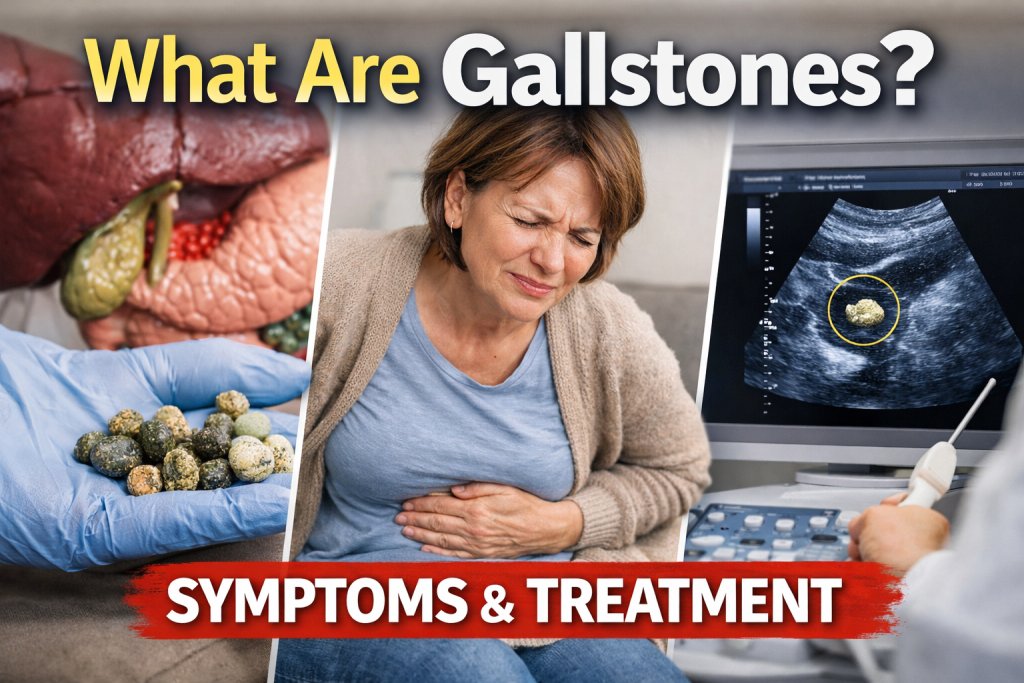
Gallstones are small, hardened deposits that form in the gallbladder, a small organ under the liver that stores bile. Some people never know they have them. Others develop sudden upper abdominal pain, nausea, or complications that need urgent care. The key difference is whether a stone stays quiet or blocks the normal flow of bile.
This guide explains gallstones in plain language: what they are, why they form, what symptoms to watch for, who is more likely to get them, and what doctors usually do next. It is written for everyday readers but grounded in current medical references.
What are gallstones?
Gallstones, also called cholelithiasis, are solid pieces of material that develop from components of bile. They can be as tiny as grains of sand or large enough to cause repeated blockage and pain. A person may have one stone or many at the same time.
Most gallstones are grouped into two main types. Cholesterol stones are the most common and form when bile contains more cholesterol than it can keep dissolved. Pigment stones are darker and are linked to excess bilirubin in bile.
Not every gallstone causes trouble. Many are found by accident during scans done for another reason. These are often called silent gallstones, and they usually do not need treatment unless symptoms or complications appear.
What does the gallbladder do?
The gallbladder stores bile made by the liver. When you eat, especially foods that contain fat, the gallbladder squeezes bile into the small intestine to help with digestion. If a stone blocks this pathway, pressure can build up and trigger pain or inflammation.
Bile normally stays in a liquid state because its ingredients are balanced. Problems can start when cholesterol, bilirubin, bile salts, or gallbladder emptying are out of balance. Over time, crystals can form and gradually grow into stones.
Gallstone symptoms
Many people with gallstones have no symptoms at all. Symptoms usually begin only when a stone blocks the gallbladder outlet or a bile duct.
Common gallstone symptoms
The classic symptom is biliary colic, often described as a gallbladder attack. It usually causes:
- sudden pain in the upper right abdomen or upper middle abdomen
- pain that may spread to the back or right shoulder
- pain after eating, especially after a heavy or fatty meal
- nausea or vomiting
- pain that lasts for several hours rather than just a few minutes
Gallbladder attacks often happen in the evening or at night. A person who has had one attack is more likely to have more in the future.
Warning signs that need urgent medical attention
Seek prompt medical care if gallstone symptoms come with:
- fever or chills
- yellowing of the skin or eyes
- dark urine or pale stools
- severe pain that does not improve
- persistent vomiting
These symptoms may mean the stone is causing a blockage, infection, or inflammation rather than a simple short-lived attack.
What causes gallstones?
Gallstones form when bile chemistry changes or when the gallbladder does not empty well. In practice, several processes may overlap.
1. Too much cholesterol in bile
This is the leading cause of the most common type of gallstone. When bile contains more cholesterol than it can dissolve, tiny crystals can form and later grow into stones.
2. Too much bilirubin
Bilirubin is a waste product formed when the body breaks down old red blood cells. Some liver diseases, infections, and blood disorders can raise bilirubin levels and contribute to pigment stone formation.
3. Poor gallbladder emptying
If the gallbladder does not contract effectively, bile may sit for longer periods and become concentrated. That stagnant environment makes stone formation more likely.
Gallstone risk factors
Gallstones can affect anyone, but some people are more likely to develop them than others.
Age and sex
Risk rises with age, and women are affected more often than men. Hormones, especially estrogen, are one reason gallstones are more common in women.
Overweight and obesity
Being overweight or living with obesity increases the risk of gallstones. This is thought to be related to changes in cholesterol handling and bile composition.
Rapid weight loss
Fast weight loss, including after bariatric surgery or very low-calorie diets, can raise the chance of gallstone formation. Slower, steadier weight loss is generally less risky.
Pregnancy
Pregnancy can slow gallbladder emptying and alter bile composition, which is why gallstones may appear or become symptomatic during pregnancy.
Family history and some health conditions
A family history of gallstones can increase risk. Certain digestive, liver, or blood-related conditions can also make gallstones more likely.
Possible complications of untreated gallstones
Gallstones are not always dangerous, but complications can be serious when a stone stays stuck.
Cholecystitis
Cholecystitis means inflammation of the gallbladder, often caused by a blocked outlet. It can cause ongoing pain, fever, tenderness, and sometimes infection. Without treatment, severe cases can lead to tissue damage or even rupture.
Common bile duct blockage
A stone that moves into the common bile duct can block bile flow and cause jaundice, pain, and abnormal liver blood tests.
Cholangitis
If a blocked bile duct becomes infected, the result can be cholangitis, a potentially dangerous infection that needs urgent treatment.
Gallstone pancreatitis
A migrating stone can also block the pancreatic duct area and trigger pancreatitis, which is inflammation of the pancreas.
How gallstones are diagnosed
Doctors often begin with symptoms, a physical exam, and a review of medical history. If gallstones are suspected, ultrasound is usually the first test because it is simple and effective for detecting stones in the gallbladder.
Other tests may include:
- blood tests to look for infection, inflammation, or bile duct blockage
- MRI/MRCP to examine the bile ducts more closely
- CT scan when complications or other causes of pain are being considered
- ERCP in selected cases, especially when a bile duct stone may need to be removed
Because upper abdominal pain can come from several conditions, doctors may also consider ulcers, acid reflux, liver disease, pancreatitis, or even heart-related causes depending on the situation.
Treatment for gallstones
Treatment depends on whether the stones are silent, causing occasional attacks, or leading to complications.
When no treatment may be needed
People with silent gallstones usually do not need immediate treatment. Instead, they may be advised to watch for symptoms and follow up if anything changes.
When surgery is the main treatment
For recurring symptoms or complications, the standard treatment is usually surgical removal of the gallbladder, called cholecystectomy. This is commonly recommended because stones often come back if the gallbladder stays in place.
What happens after gallbladder removal?
You can live without a gallbladder. After surgery, bile flows directly from the liver into the small intestine instead of being stored first. Most people digest food normally afterward, though some may have temporary diarrhea or looser stools, especially after fatty meals.
Can gallstones be prevented?
Not all gallstones can be prevented, but some habits may lower the risk.
Helpful prevention strategies
- maintain a healthy weight
- avoid crash diets and very fast weight loss
- choose gradual, steady weight loss when needed
- eat regular meals rather than prolonged fasting
- build meals around fiber-rich foods such as fruits, vegetables, legumes, and whole grains
Diet alone does not guarantee prevention, but healthier eating patterns and weight stability appear to help reduce risk.
Living with gallstones
If you know you have gallstones but symptoms are mild or absent, the most important step is knowing what a true gallbladder attack feels like and when to get help. A symptom diary can also be useful, especially if attacks seem linked to heavy or fatty meals.
Do not try to self-manage severe or persistent pain at home. Gallstones can shift from a manageable problem to an emergency if they trigger infection, pancreatitis, or a prolonged blockage.
When to call a doctor right away
Contact a healthcare professional urgently if you have upper right abdominal pain plus fever, jaundice, repeated vomiting, or pain that lasts for hours. These are not typical “wait and see” symptoms.
FAQ
Can gallstones go away on their own?
Most established gallstones do not simply disappear on their own. Small stones may sometimes move out of the gallbladder, but that movement can also cause blockage and symptoms.
Are all gallstones painful?
No. Many people have silent gallstones and never develop symptoms.
What does gallstone pain feel like?
It is often sudden, steady pain in the upper right or upper middle abdomen, sometimes spreading to the back or right shoulder. It may start after eating and can last several hours.
What foods can trigger gallbladder pain?
Fatty or heavy meals are a common trigger because they make the gallbladder contract. Triggers vary from person to person, but rich meals are a frequent pattern.
Can stress cause gallstones?
Stress is not considered a direct cause of gallstones in the major medical references reviewed here. However, stress can affect appetite, eating habits, and how strongly pain is felt. This is a practical inference rather than a direct guideline statement.
Do gallstones always require surgery?
No. Silent gallstones often do not need treatment. Surgery is more commonly recommended when stones cause repeated symptoms or complications.
Conclusion
Gallstones are common, and many never cause symptoms. Problems usually begin when a stone blocks the flow of bile and triggers a gallbladder attack, inflammation, or a more serious complication. Recognizing the pattern of pain, understanding your risk factors, and knowing when symptoms are urgent can make a major difference.